
09 Oct Event Security Planning: A PracticalGuide for Maryland and Washington,D.C. Organizers
A successful event should feel welcoming, organized, and safe. That result rarely happens by accident. From private celebrations and community gatherings to corporate functions, concerts, conferences, and public events, organizers must consider how guests enter, move through, and leave the venue. Event security
planning helps define responsibilities before crowds arrive and gives staff a framework for handling unexpected situations.
Begin With the Event Profile
Security planning starts with a clear description of the event. Important details include the venue, date, operating hours, expected attendance, age restrictions, alcohol service, performers or featured guests, ticketing method, vendors, parking, and whether the event is public or invitation-only. The organizer should also identify any prior incidents, known disputes, protest concerns, valuable equipment, or restricted spaces.
Attendance is only one factor. A small event with alcohol, cash handling, a high-profile guest, or limited exits may require more planning than a larger event in a purpose-built venue with established procedures. Security recommendations should reflect the whole environment rather than a simple guest count.
Map Arrival and Entry
The guest experience begins before the entrance. Organizers should evaluate parking areas, rideshare locations, pedestrian routes, ticket lines, registration tables, and accessibility needs. Confusing arrival patterns can create congestion and frustration, especially when guests do not know where to go or which items are
permitted.
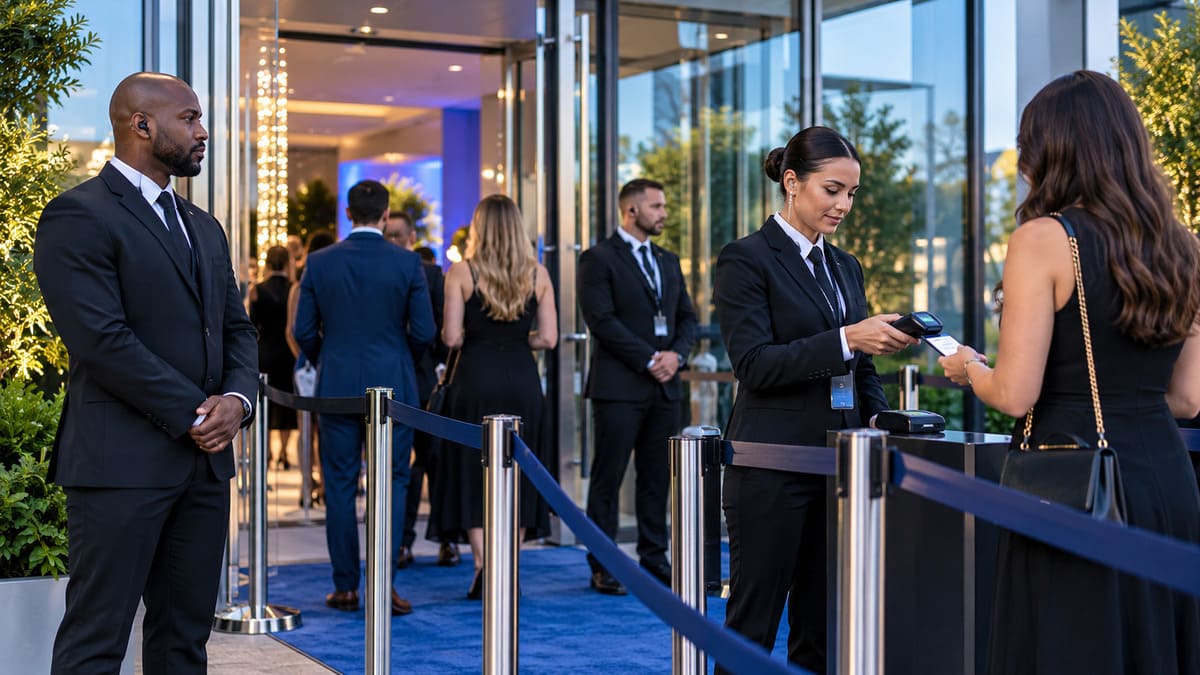
Entry procedures should be communicated in advance and displayed clearly. If the event uses tickets, guest lists, identification checks, wristbands, credentials, or bag policies, organizers should decide who is responsible for each step. Security personnel can support the process, but the rules must come from the
organizer and comply with applicable law and venue requirements.
Define Restricted Areas
Events often contain areas that are not open to every guest: backstage rooms, offices, storage spaces, cash-handling locations, catering areas, equipment zones, VIP sections, or staff-only entrances. Restricted areas should be identified on the event plan, marked when appropriate, and supported by a credential system that
staff can understand quickly.
A complicated credential system can become difficult to enforce. Simple visual distinctions, accurate lists, and a clear authorization contact are usually more useful than rules that change throughout the event. Organizers should also plan how vendors, performers, media, and late-arriving staff will be verified.
Plan for Crowd Movement
Crowd management is not limited to very large events. Lines can form at entrances, restrooms, bars, merchandise tables, coat checks, elevators, and exits. Furniture, temporary barriers, equipment cases, and vendor displays can narrow walkways. Organizers should keep primary paths open and monitor areas where
guests are likely to gather.
Security personnel may assist with line organization and communicate concerns, but life-safety planning, occupancy limits, fire-code compliance, and emergency egress should be addressed with the venue and appropriate authorities. A security company should never be presented as a substitute for qualified fire,
medical, engineering, or emergency-management professionals.
Create a Communication Structure
During an event, the question “Who makes the decision?” should have a clear answer. The organizer should identify a lead decision-maker and backup contact. Security personnel need to know who can authorize schedule changes, deny or approve an exception, request removal of a guest, pause an activity, or contact
emergency services.
Communication methods may include radios, designated phone numbers, group messaging, or fixed check-in points. Whatever method is selected, it should be tested before doors open. Staff should also know what information to communicate: location, description, immediate risk, assistance needed, and whether emergency
services have already been contacted.
Prepare for Common Scenarios
Not every issue can be predicted, but common scenarios can be discussed in advance. These may include an intoxicated guest, a medical concern, a lost child, an unauthorized person in a restricted area, a disagreement at entry, a missing item, severe weather, a power interruption, or a person who refuses to follow venue rules.
Planning does not guarantee an incident-free event; it reduces confusion and helps the team respond more consistently.
Emergency response should always prioritize life safety and appropriate authorities. In a serious or immediate emergency, call 911. Event personnel should act only within their training, legal authority, and assigned responsibilities.
Document Important Incidents
After an incident, accurate documentation can help the organizer understand what happened and determine follow-up. Useful reports identify the time, location, people involved, observed behavior, actions taken, notifications made, and any available witness information. Reports should avoid assumptions and
unnecessary personal information.
A post-event review is also valuable even when no major incident occurs. Organizers can discuss line delays, access confusion, radio coverage, lighting, staffing positions, parking flow, and any policy that was difficult to apply. Those lessons improve the next event.
Coordinate With the Venue and Public Authorities
The venue may already have rules, emergency plans, preferred vendors, staffing requirements, and relationships with local police, fire, or emergency medical services. Event organizers should learn those requirements early rather than discovering them on the day of the event. Some gatherings may require permits, fire inspections, licensed alcohol service, medical coverage, traffic support, or other approvals beyond the role of a private security company.
For higher-attendance or higher-risk events, organizers should ask the appropriate authorities and qualified professionals what planning is required. Share final schedules, site maps, access instructions, emergency contacts, and responsibility assignments with the people who need them. Sensitive details should be distributed carefully, but essential team members must have enough information to act. Coordination reduces duplicated effort and helps ensure that an urgent concern reaches the correct resource quickly.
An Event Security Planning Checklist
- Confirm venue rules, occupancy limits, exits, emergency procedures, and required permits.
- Estimate attendance and identify guest, vendor, performer, and staff entry points.
- Define prohibited items, ticketing, identification, bag, and credential procedures.
- Identify restricted areas and the people authorized to enter them.
- Establish the event decision-maker, backup contact, and communication method.
- Review parking, rideshare, pedestrian flow, accessibility, and closing procedures.
- Discuss likely scenarios, emergency escalation, and documentation expectations.
Discuss Your Upcoming Event
Arseas Security Services can speak with organizers about event security coverage in Maryland and the Washington, D.C. metropolitan area. Availability and staffing depend on the date, venue, schedule, duties, and advance notice. Call 443-966-5502 to discuss your event and request a written proposal.