
02 Oct Why Professional Security GuardsMatter for Commercial Properties
Commercial properties bring together employees, customers, tenants, vendors, delivery drivers, contractors, and visitors. That activity creates opportunity, but it also creates security challenges. Doors may remain open during business hours, parking areas may be busy, deliveries may arrive at different entrances, and staff
members may not always know who belongs in restricted spaces. A professional security presence can help a property operate with greater awareness and consistency.
Visible Security Can Influence Behavior
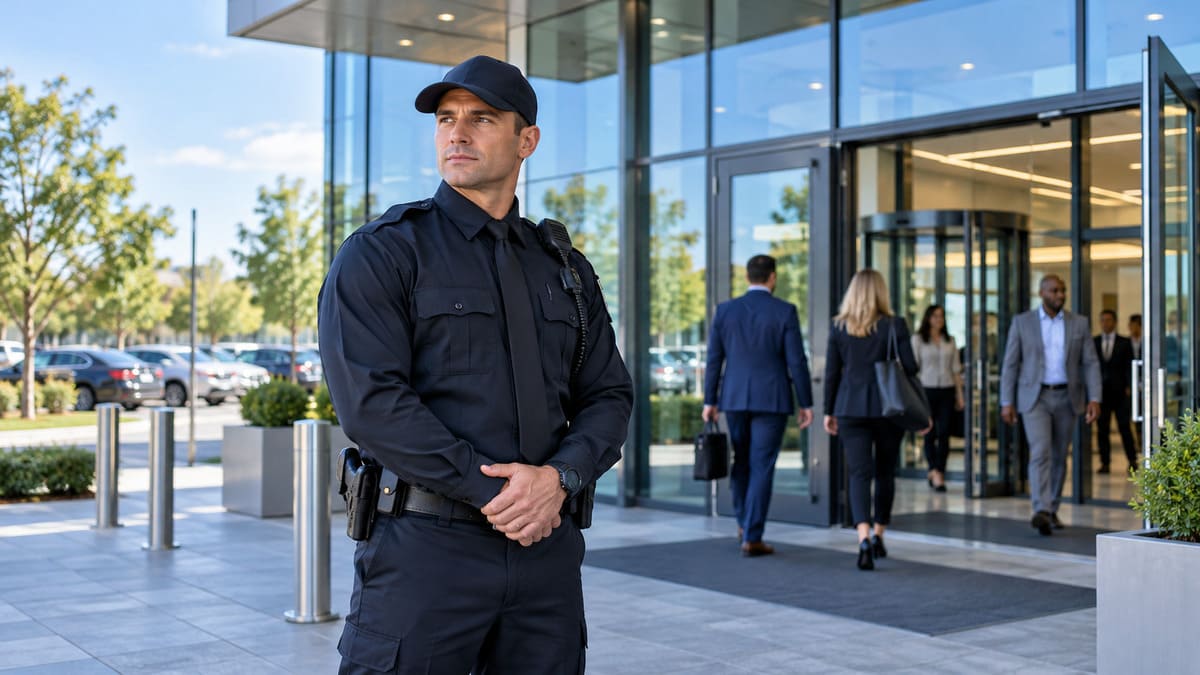
One of the most immediate benefits of an on-site security presence is visibility. People are generally more aware of rules and surroundings when trained personnel are clearly present. Visibility may discourage trespassing, disruptive conduct, unauthorized entry, theft, vandalism, and other unwanted activity. It also
signals to employees and visitors that property management takes safety and order seriously.
Deterrence should not be overstated. No security service can guarantee that an incident will never occur. However, a consistent presence can reduce opportunities for misconduct and make it more likely that unusual activity will be noticed, documented, and communicated promptly.
Security Guards Support Access Procedures
Many commercial properties rely on access policies, but policies are only effective when they are applied consistently. Security personnel may support visitor sign-in, credential checks, vendor procedures, delivery routing, restricted-area rules, and after-hours entry. These tasks help the client maintain a more accurate
understanding of who is entering the property and why.
The best access-control plan is specific. It identifies which entrances should be used, who may authorize visitors, what identification is acceptable, how deliveries are handled, and what happens when a person does not meet entry requirements. A security officer should receive clear instructions rather than being expected to
invent policy during a difficult interaction.
A Reliable Point of Contact
When employees or visitors notice a concern, they need to know where to report it. A security station or identifiable officer provides a practical point of contact. The matter may be minor, such as a door left open, a blocked walkway, or a visitor who needs directions. It may also require escalation, such as suspicious activity,
a medical emergency, a disturbance, or evidence of property damage.
Security personnel can help gather basic information, notify the appropriate client representative, and contact emergency services when required. Their role should be defined by law, training, the service agreement, and the client’s procedures. A professional response is calm, respectful, and focused on the next appropriate
action.
Observation and Documentation Improve Follow-Up
Commercial property concerns often occur over time rather than in a single dramatic event. A loading door may repeatedly be left unsecured. The same unauthorized vehicle may appear after hours. Lighting may be out in a particular area. A contractor may continue using an incorrect entrance. Without documentation, these
patterns can be difficult to identify.
Routine activity logs and incident reports can help management review what occurred, when it occurred, who was notified, and what follow-up may be needed. Clear reports can also support conversations with property owners, tenants, maintenance teams, insurers, or law enforcement. Reports should be factual, objective, and
limited to relevant observations rather than speculation.
Security Can Support Customer and Employee Experience
Security is sometimes viewed only as enforcement, but a well-managed security presence can also improve the daily experience of a property. Officers may greet visitors, provide directions, help maintain orderly lines, monitor entrances during opening or closing, and assist with established procedures. The tone matters. A
courteous, composed officer can support security without making a professional environment feel unwelcoming.
Employees may also feel more comfortable when they know there is a defined process for reporting concerns. This is particularly relevant during early-morning openings, evening closings, busy events, contentious customer interactions, or periods when staffing is limited.
Every Property Needs a Site-Specific Plan
An office building, warehouse, retail center, medical office, and mixed-use property do not have identical needs. Effective planning considers operating hours, tenant activity, public access, sensitive areas, delivery schedules, parking conditions, prior incidents, emergency contacts, and available technology. Cameras,
alarms, locks, lighting, and access systems may all contribute to the larger security plan, while personnel provide observation, communication, and response within their authorized role.
Property managers should review the post instructions regularly. Construction, tenant turnover, seasonal traffic, staffing changes, and new access systems can make old instructions inaccurate. Security coverage should evolve as the property changes.
Integrate Personnel With Physical Security
Security officers are most effective when their work supports the property’s other safeguards. Good lighting makes exterior observation easier. Properly maintained locks and access systems reduce avoidable entry problems. Cameras may help management review activity, while alarms can provide notice of specific conditions. Personnel add a human layer by recognizing context, communicating with people, and escalating concerns. Property management should clarify who monitors each system, who may review recordings, who receives alarm notifications, and what an officer should do when equipment fails. Regular coordination helps prevent gaps caused by assuming that someone else is responsible.
Training employees also strengthens the plan. Staff should know how to report a concern, avoid bypassing access procedures, protect credentials, and preserve emergency exits. Security is not the responsibility of one officer alone; it is a shared operational practice supported by clear roles.
Questions to Ask Before Requesting Coverage
- Which locations, entrances, floors, or exterior areas require the most attention?
- What hours have the highest visitor volume or greatest concern?
- Who is authorized to approve access or change instructions?
- Which matters should be reported immediately, and to whom?
- What records or reports does management need?
- How should security coordinate with staff, maintenance, and emergency responders?
Build a More Consistent Security Presence
Professional security guards can help commercial properties strengthen visibility, apply access procedures, improve documentation, and create a dependable point of contact. The value comes from matching the coverage to the property and establishing clear expectations from the start.
Arseas Security Services works with clients in Maryland and the Washington, D.C. metropolitan area to discuss commercial security needs and practical service options. Call 443-966-5502 to request a consultation and customized proposal.